
Fifty States, Fifty Definitions of Good Food

The Fracturing of America’s Food System
For decades, America’s food system operated on a fundamental assumption: one national market, one broadly accepted set of standards, and federal institutions trusted to establish the rules.
That assumption is collapsing.
From California’s livestock housing mandates to Texas food ingredient warnings and state-specific restrictions on SNAP purchases, we’re witnessing something more consequential than the proliferation of conflicting state regulations. We’re watching the fragmentation of America’s social license to produce food.
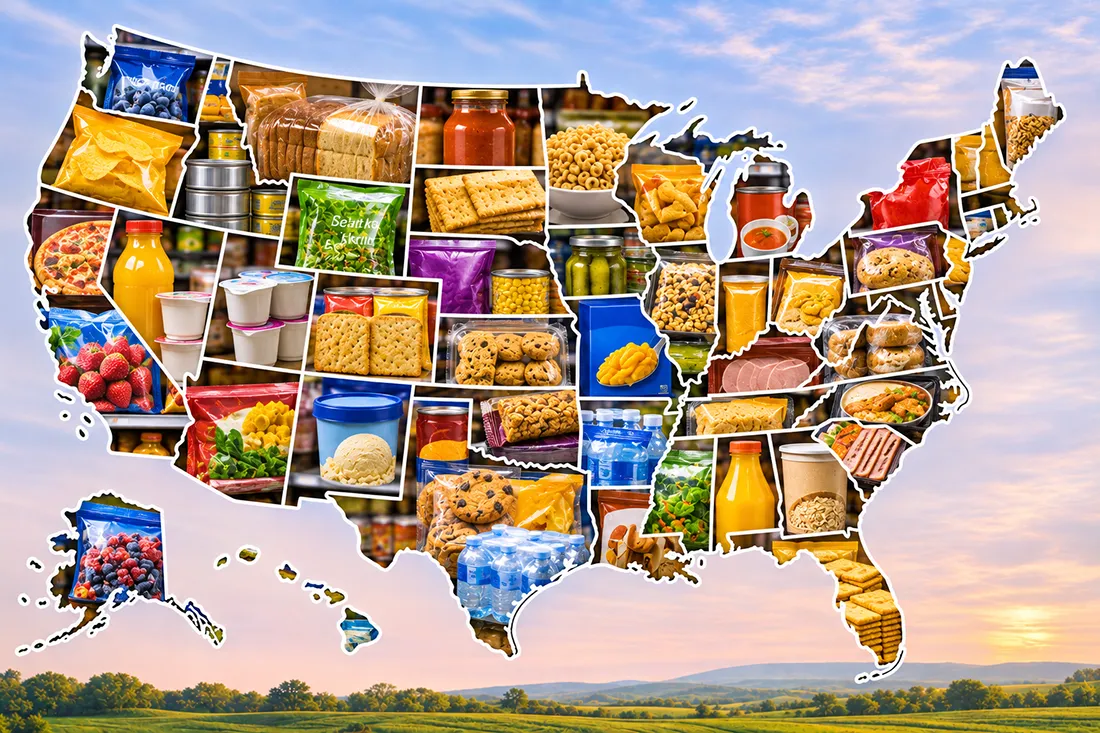
Two powerful forces are driving this transformation: declining trust in national institutions and increasingly divergent expectations about what food means and expectations for how it’s produced.
First, the collapse of institutional trust has created a vacuum that state lawmakers are eager to fill.
Gallup’s 2026 research found that only 28% of Americans trust Congress, while just 33% trust the federal government’s ability to address domestic problems. By comparison, 55% trust state government and 67% trust local government.
When national institutions lose credibility, authority doesn’t disappear. It migrates.
State legislators increasingly see both an opportunity and an obligation to address concerns they believe Washington has neglected or is unable to address.
Texas enacted legislation requiring warnings for certain food ingredients. California’s Proposition 12 establishes livestock housing requirements that affect producers nationwide. States including Indiana, Texas and Nebraska received federal approval for state-specific restrictions on purchases using SNAP benefits.
Each reflects a judgment about what government should protect, what consumers deserve to know, and who should decide.
Second, we’re experiencing a fundamental fragmentation of values and expectations.
Consider the contrast between a California consumer concerned about animal confinement and an Iowa producer concerned about production efficiency, affordability and the ability to farm without distant regulators dictating practices.
Neither perspective is inherently illegitimate. Both reflect deeply held values shaped by experience, community and culture.
Increasingly, geography influences not simply what people eat, but what they believe food should represent.
For some, responsible food production means environmental sustainability, enhanced animal welfare and ingredient transparency. For others, it means affordability, productivity, food security and preserving agricultural livelihoods.
These values aren’t necessarily incompatible. But our increasingly fragmented information environment makes finding common ground more difficult.
Here’s the uncomfortable reality for food and agriculture leaders: Scientific consensus and federal regulatory compliance are no longer sufficient to secure public acceptance.
A product can be federally approved, scientifically validated and economically beneficial, yet still face rejection because it conflicts with the values of a particular community.
And the consequences aren’t limited to state boundaries. California’s production standards affect farmers in Iowa. Texas labeling requirements influence what ingredients national brands must call out on a label.While implementation is still being litigated, Texas SB25 illustrates that food regulation is increasingly about values, not simply scientific risk assessment.
The undeniable challenge is that a national food system is increasingly governed by competing local definitions of what is acceptable.
The industry’s response cannot simply be lobbying for uniformity or communicating more science. We need a fundamentally different approach, one that recognizes the legitimacy of diverse values while identifying the common ground that still connects us.
And there is reason for optimism. Americans may disagree about how food should be produced, but we share important aspirations: food that is safe, affordable, accessible and produced in ways that reflect our values. Those shared aspirations offer a foundation for rebuilding trust.
The opportunity for food and agriculture leaders is to move beyond defending practices and complying with regulations to understanding expectations, anticipating emerging concerns and engaging communities before disagreements become political battles.
The question is no longer how we convince everyone to accept one definition of good food. It’s how we build a food system that earns trust across many definitions.
That requires curiosity before advocacy, listening before persuasion and engagement before conflict.
We may never have fifty states with one definition of good food. But we can build a food system that respects our differences, strengthens our shared interests and earns the confidence of the communities it serves.
The future of food isn’t something we should wait for fifty state legislatures to define. It’s something we have an opportunity, and a responsibility, to shape together.
About The Author
Charlie Arnot is recognized as a thought leader in food and agriculture. He is highly regarded as both a writer and sought-after speaker who engages audiences across the globe. Charlie has more than 25 years of experience working in communications, public relations and issues management within the food system. He serves as CEO of the Center for Food Integrity, a international non-profit organization dedicated to building consumer trust and confidence in today’s food system. He’s also the founder and president of Look East, an employee-owned consulting firm.